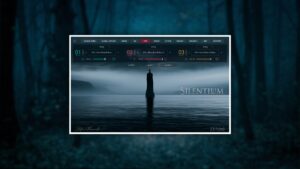
Some sample libraries live or die on a single instrument. Wavelet Audio’s Runa series is built around exactly that principle: the kobyz, a two-stringed bowed instrument from Kazakhstan. It’s carved from a single piece of wood, and both its strings and its bow are traditionally made of horsehair. One string carries the melody and the other the resonance.
Across two libraries, Wavelet ask it two quite different questions. Runa, subtitled Elder Scoring Strings, asks how this instrument is typically played for the most part. Runa 2, subtitled Cinematic Articulations, asks what else it can become. I reviewed them back to back, starting with the original. The more time I spent with both, the clearer it became that they really aren’t the same thing done twice, or slightly better versions going from 1.0 to 2.0.
What these libraries are, and what they aren’t
It’s worth clearing something up early, because both subtitles point you slightly in the wrong direction. “Scoring strings” and “cinematic articulations” make it easy to picture a conventional string library, and that isn’t what this is. If I were writing the product page, I’d lead with the kobyz itself. It’s a raw, traditional string instrument in the same broad family as the tagelharpa, and both libraries build on its character instead of sanding it down.
Both run in the free Kontakt Player (8.1.0 or later), and both are NKS-ready. They also share the same recording approach, with a TLM 103 to my ear providing the fuller body and picture of the sound and an MK4 adding a more direct and present sound. Runa 2 doesn’t require the original, but the two were clearly designed with each other in mind.
Runa: an instrument that rewards attention
I’ll admit I came to the original with slightly lowered expectations. When you know a (presumed) “sequel” exists, you instinctively go looking for whatever feels dated or unfinished. That instinct came up mostly empty.
“This turned out to be far more mature, versatile, flexible than I expected.”
The articulation set covers the essentials: sustains, staccato, spiccato, harmonic shorts, pizzicato, ricochet, tremolo and crescendos. On top of that you get rebow, true legato, portamento, fast legato and trills, plus normal and hard harmonics on their own key switches. Several of these do more than their names suggest.
The sustains, for instance, aren’t simply held notes. You can set them to repeat in eighth, quarter, half or whole notes, or in a custom rhythm, and each setting has its own subtly different texture. The fast legato control changes the tone of the instrument a great deal more than you’d expect. At its slowest it’s sultry and flowing, and at its shortest it turns sharp and tactile. The difference is big enough that I suspect it draws on entirely different sample material. It quietly turns a legato parameter into a textural tool.
Some of the highlights here were genuinely special. So often the rebow is where a library sounds synthetic and repetitive, but here it sounds like the player meant it, even at speed. The pizzicato has an almost pick-strummed, guitar-like quality, with several transient points inside every pluck, and I could have played it all day. The ricochet adds a percussive element without ever leaving the instrument. When I layered the tremolo, it drifted slightly in and out of phase with itself, producing polyrhythmic patterns I’d happily build a whole piece around.
“I’m actually really impressed by how good the rebow sounds… it actually sounds like it’s intentionally being played.”
The honest caveat is that Runa asks something of you. An instrument this texturally rich needs you to move with it. That means switching articulations, choosing where to rebow and where to stay legato, and matching the legato speed to the phrase. Leave it on one setting and it quickly tips from realistic and organic into repetitive, then synthetic. In my hands, the parts that sang most naturally came from the built-in sequencer, where you can map articulations step by step instead of juggling key switches in real time. That’s exactly why I wished the Sequence Examples folder were bigger, perhaps three times its current size.
Then there’s the Rhythm Strings engine, a substantial addition from the version 1.1 update. The patterns are tight and modern in their delivery, yet you still hear all the rawness and grit of the instrument. That points to one of my favourite, and I think underserved, uses for instruments like this: an action cue where the orchestral spiccatos have drive but not enough bite. The kobyz supplies the grit. Runa also holds together tightly instead of teetering on the edge of falling apart, so it sits comfortably next to big, tight orchestral elements.
“It’s an open raw sound, but everything is nicely polished in terms of the tightness.”
The soft, high and extreme processing folders take the instrument far beyond itself, and the heavily distorted material is superb, the kind of thing you could drop under a Viking-era battle scene when you want the old world with a modern edge. The ambient pads surprised me most.
“Some of the ambient pads here were stunningly good. I forgot I was even using a library that is sampling this instrument.”
Small interface details matter to me, and Runa has one I don’t think I’d seen before. The bow actually moves on the instrument graphic as you play, and the neck lights up where you’re playing. Some will call it a gimmick. For me it added an interactive quality that changed how I connected with the instrument, and it’s done simply and tastefully enough that it never feels like decoration. The colour themes are a nice touch too. A few things could be clearer, though. In the Rhythm Strings engine sequencer, the articulation symbols (spiccato or staccato) don’t stay labelled once you’ve selected them, the mono setting is tucked away under an options cog, the pizzicato range is narrow (perhaps it’s just what the real instrument actually allows), and the two-bar crescendo leaves much of its first bar empty when what I wanted was a long, slow swell.
Runa 2: the space between the notes
Going into Runa 2, I honestly wondered where the concept could go, since Runa had left me feeling there wasn’t much I couldn’t express with it. I hadn’t considered extended techniques.
Runa 2 has nine articulations: Calm, Alive, Bends, Harmonics, Staggers, Waves, Fury, Surges and Tense. They’re closer to what you’d expect from a contemporary string ensemble library than a traditional one, translated into this instrument’s world. Many of the samples are long and evolve considerably, drifting in pitch and texture while staying centred on an identifiable note. Surges and Tense were favourites even in a completely initialised state. Calm and Alive, on the other hand, first struck me as static, even a bit vanilla. Then I heard them through the Cinematics presets, where the effects multiply every subtle detail, and they became some of my favourite sounds in the library.
“You could hear just the beauty of the chaos fighting the order.”
That unpredictability cuts both ways. Moments of real beauty can be followed by moments where the tonality seems to dissolve, and finding exactly the right stretch of a sample for your cue can take some digging. Levels move a lot as well: in Bends I saw close to a 12 dB swing. This can be exactly what you need if you’re a purist when it comes to dynamics, but can be a bit much for those who don’t need as much range. A resonance suppression tool will help here easily, though. But those same dynamic moments can produce ideas you’d struggle to reach any other way, and I’d happily do the extra work to dig them out. You can even layer several articulations at once by holding a modifier key while selecting them, which is an opportunity and a danger in equal measure.
The standout new feature is the gate. The idea is simple: a rhythmic on-off effect. But because the source samples are constantly shifting in pitch, harmonics and texture, each opening of the gate catches a slightly different snapshot of that state, so you hear tiny pitch changes from one pulse to the next. It’s a small tool that suits these samples brilliantly.
“It becomes a really interesting combination of the organic meeting the synthetic.”
Some of the gated presets, along with the Bass & Braams and Pulses folders, confirm something that holds across both libraries: Runa nails anything low, heavily distorted and dark. The Keys & Plucks folder was the real revelation. It runs these long, evolving samples through a short ADSR envelope and the library’s processing, and the results are sounds I’ve rarely heard anywhere, with organic rawness twisted into something electronic. At one point I stopped talking entirely and started writing a track. My only complaint about that folder is its size. I’d love a huge one.
“The highest praise I can give to any instrument is immediately starting to write music.”
Beyond the articulations, Runa 2 adds loops in fast, mid and slow flavours. They come with a nice, big, clear waveform editor that shows each loop’s original pitch and tempo, a small thing that saves real time. There are also phrases, recorded on both the kobyz and the lower-pitched nar-kobyz, a deeper voice I’d wanted from the original. The phrases are pitch-mapped with six variations per key, though “variations” here means different phrases around the same fundamental, not variations of a single phrase. Layering loops turned out to be one of the most fun parts of the library. Some of the loop editing behaviour, especially what the reset button actually resets, left me scratching my head even with the manual open.
How they fit together
What I appreciate most is that these two libraries don’t overlap. You won’t find yourself agonising over which one to buy, because they do distinctly different things.
Runa covers the core articulations and a remarkably comprehensive rhythmic toolkit, from the rhythmic sustains to the sequencer and the Rhythm Strings engine. Runa 2 doesn’t try to repeat any of that. It adds the stranger, richer, in-between material, and its gate offers a new kind of rhythmic expression instead of more of the same. Even where they share territory, they lean differently. I preferred Runa’s spacey ambient pads, while Runa 2 excels at shifting, string-textured pads, and both deliver heavy low end with ease.
“They’re actually doing distinctly different things and complementing things instead of being in this weird zone where they have a lot of overlap.”
Who this is for
If you write hybrid, dark or historically flavoured cinematic music, or you simply want more grit on top of your conventional strings, Runa covers the fundamentals. Runa 2 is for composers and sound designers after texture, drones and unusual material that generates ideas as much as it fulfils them. If you prefer to play a part in once and leave it untouched, neither library will show you its best side, because both reward active (though not excessive) key-switch programming.
Runa is $199 and Runa 2 is $179, and owners of either one can get the other at a crossgrade price. At the time of writing (September 2026), both are on sale until October 1, 2026: an introductory price for Runa 2 and a sale price for Runa Elder Scoring Strings. Prices and offers change, so check Wavelet Audio’s website for the current details before buying.
Final thoughts
It’s tempting to file Runa under “old traditional strings”, and that would undersell both libraries. The kobyz may be one of the most versatile instruments I’ve heard in this category. It has a distinct voice of its own, yet it bends to an extraordinary range of situations, from tight rhythmic comping to colossal distorted bass to spacious ambience. Runa gives you the instrument, played properly and in depth. Runa 2 gives you what lives between those gaps. Together they add up to something close to a complete kobyz ecosystem, and I’d much rather have that than two libraries competing for the same job.
Disclosure: Wavelet Audio provided both libraries and compensated me for the time spent producing the video reviews. All opinions are my own.
Prefer Video?
🕵🏻♂️ Runa Elder Scoring Strings – Deep Dive Review: https://youtu.be/AQAonXz_fHU
🕵🏻♂️ Runa 2 – Deep Dive Review: https://youtu.be/FuFJq7UdZx4